


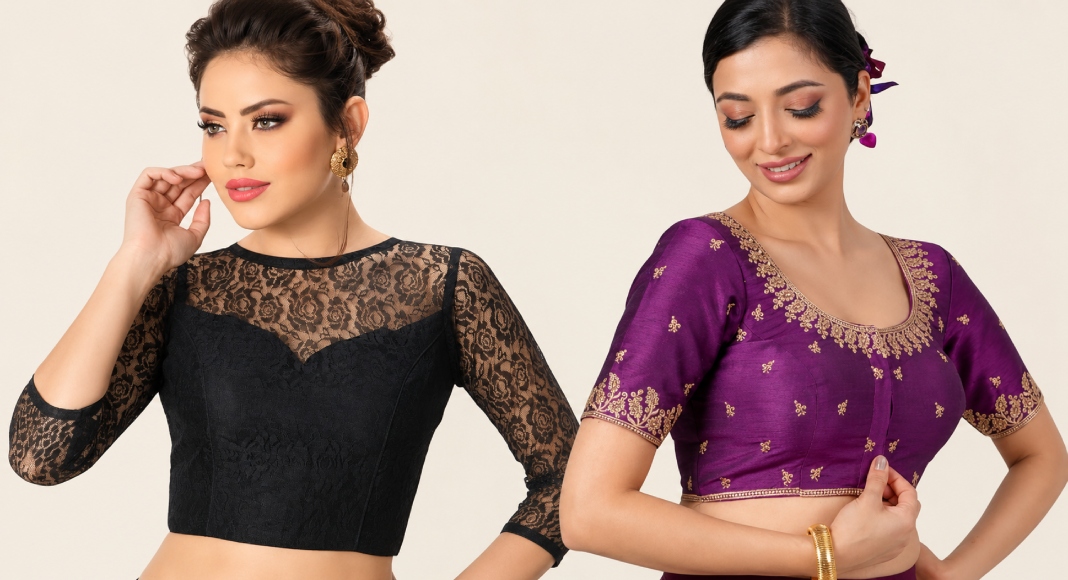
A saree blouse can change how the entire outfit feels, yet it is often chosen after the saree and in a hurry. A useful blouse is not simply decorative. It should let you move your arms, sit comfortably, and work with more than one saree if possible. Neckline, sleeve, fabric, and closure all matter more once the outfit is actually worn for several hours.
Quick Style Reference
| Option | Good For | Try It With / Check |
| Solid blouse | Repeat styling | Printed, woven sarees |
| Textured blouse | Occasion wear | Plain sarees |
| Sleeved blouse | Day functions | Traditional looks |
| Minimal sleeveless | Modern styling | Light sarees |
Start With the Sarees You Already Own
A Pink Blouse can be more useful than expected if the shade connects with floral prints, pastels, or contrast borders in your wardrobe. Hold the colour of the pink blouse against more than one saree before deciding. A blouse that works with two or three drapes earns its space quickly.
Arm Movement Is the Real Fit Test
Raise both arms and reach forward. The blouse should stay in place without cutting into the armhole or pulling sharply across the back. Very fitted blouses can still be comfortable, but they need enough ease at the shoulder and bust for normal movement.
Use Strong Colour as an Intentional Contrast
A Red Blouse can turn a neutral or gold-toned saree into a more striking outfit. A Red Blouse is especially easy to repeat across festive wardrobes, but the exact shade matters. Warm brick, bright scarlet, and deeper red all behave differently against a saree border.
Check the Closure and Back Before the Event
Hooks, zips, and tie details should feel secure and lie flat. Sit down while wearing the blouse and make sure the back neckline stays where you want it. A beautiful design that needs constant checking will make the whole saree less enjoyable.
Fabric Should Support the Shape
Silk blends and structured cottons hold a tailored silhouette, while softer fabrics create more drape. Lining can improve comfort and opacity. And if the blouse has embroidery, look inside for rough threads or edges that may rub during long wear.
Do a Saree-and-Seat Trial
If possible, pin the blouse with a saree and sit down before the event. The combination can feel different from trying the blouse alone because pleats, pallu weight, and waist position change how the upper body moves. Check whether the neckline shifts and whether the armhole still feels comfortable when you reach forward. Also notice where blouse seams meet saree borders. This short trial helps catch fit issues while there is still time to alter them, and it gives you a much better idea of how the complete outfit will feel for several hours. Check the blouse again after ten minutes, because small pressure points can become clearer once the fabric settles during normal wear.
To Wrap Up
The right blouse should support the saree rather than compete with your comfort. Choose a colour that can repeat across several drapes, test the armholes and back while moving, and pay attention to lining and closure. A well-fitting solid blouse can often do more for a wardrobe than several ornate pieces that only match one saree.
FAQs
1. Should the blouse match the saree exactly?
Not necessarily. A contrast blouse reads more deliberate than an approximate match, and gold, cream or black work with almost any saree.
2. Is a readymade blouse worth buying?
Only if you get it altered. Blouse grading varies enormously between makers, and an approximate fit undermines the whole outfit in photographs.
3. Padded or unpadded: which is the better choice?
Depends on the occasion. Padded gives a smoother line under fine fabric and removes the need for separate support underneath, which is why most readymade blouses default to it. Unpadded runs cooler, and for a long summer function that difference becomes noticeable by the third hour.
4. Why does the back of a blouse matter so much?
Because the pallu falls forward, which means the back stays visible for most of the time a saree is being worn. A deep back, keyhole, or tie-back reads deliberate, while a plain closed back reads more conservative, so it’s worth as much thought as the front.
5. How far in advance should I get a blouse stitched?
About a week, since most sarees come with an unstitched piece that still needs a tailor. Leaving it until a couple of days before a function usually means a rushed fit that doesn’t sit as well.