









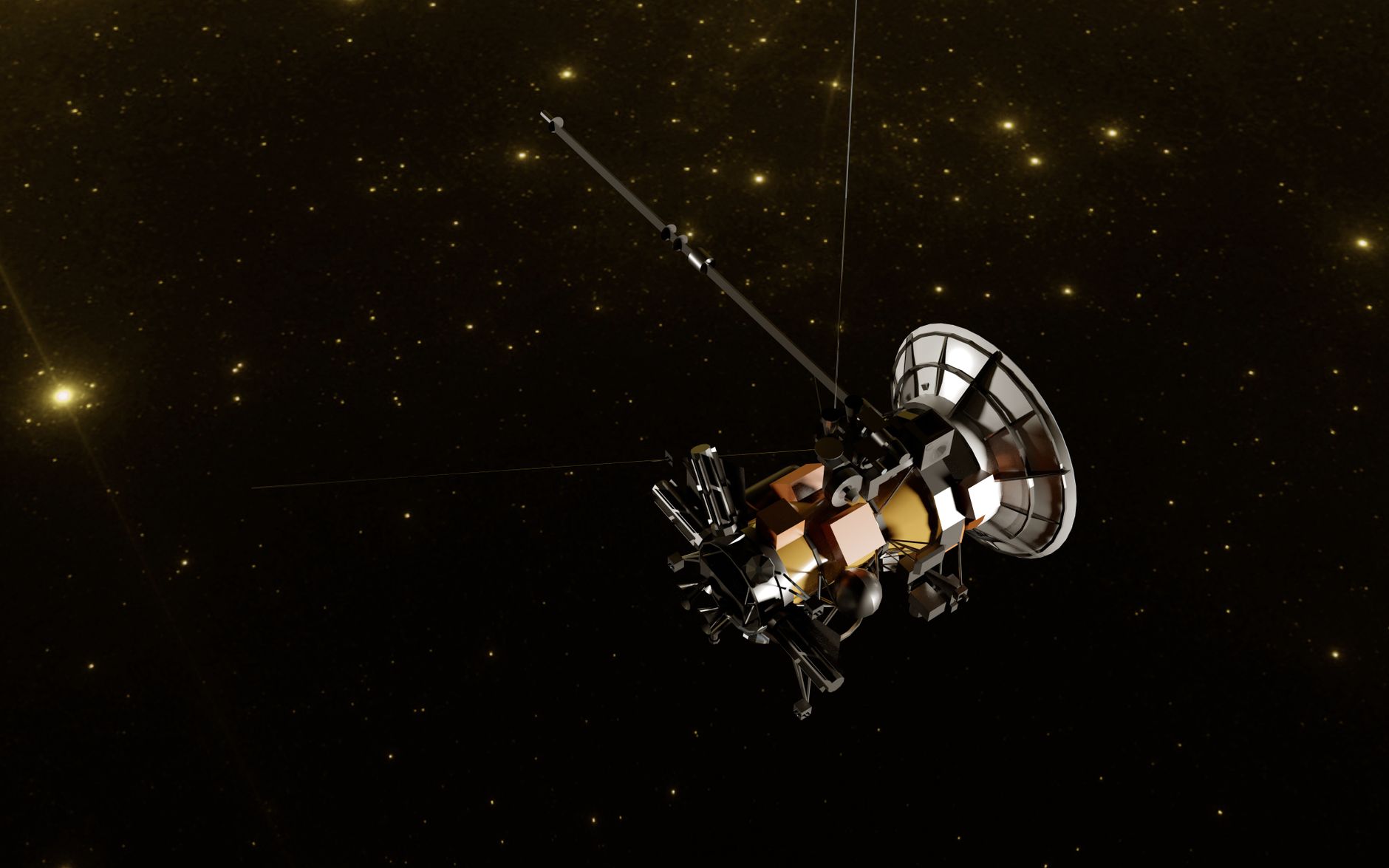
The Voyager 1 milestone is a remarkable achievement in space exploration, as it reaches one light-day from Earth after nearly 50 years.
What is the Voyager 1 milestone?
The Voyager 1 milestone marks a significant achievement in human space exploration, as the spacecraft has reached a distance of one light-day from Earth. This remarkable feat brings us closer to understanding the vastness of our solar system and the universe beyond. Launched on September 5, 1977, Voyager 1 has traveled over 14 billion miles, making it the farthest human-made object from our planet.
As it journeys through interstellar space, Voyager 1 continues to send valuable scientific data back to Earth, providing insights into cosmic phenomena that were previously beyond our reach. Its primary mission to study the outer planets has expanded into a broader exploration of the heliosphere and the interstellar medium.
Key achievements of the Voyager 1 mission include:
- First close-up images: Voyager 1 provided the first detailed photographs of Jupiter and Saturn, revealing their complex atmospheres and stunning rings.
- Golden Record: The spacecraft carries a golden record containing sounds and images from Earth, intended as a message to potential extraterrestrial life.
- Interstellar exploration: Voyager 1 is the first spacecraft to enter interstellar space, offering insights into the conditions beyond our solar system.
As the Voyager 1 milestone is celebrated, many wonder if it represents the pinnacle of human achievement in space exploration.
The journey of Voyager 1 explained
The journey of Voyager 1 has been nothing short of extraordinary. Launched on September 5, 1977, this spacecraft was tasked with exploring the outer planets of our solar system. Over the decades, it has traversed vast distances, providing invaluable data about Jupiter, Saturn, and their moons. As it continues its journey, Voyager 1 has now reached a significant milestone: it is currently one light-day away from Earth.
Voyager 1’s primary mission was to gather information about the gas giants and their atmospheres, but its mission has evolved over time. Today, it operates in the interstellar medium, the space between stars, where it is continuously sending back data about cosmic rays, magnetic fields, and the heliosphere.
One of the most remarkable aspects of Voyager 1’s journey is its longevity. After nearly 50 years in space, the spacecraft remains functional, relying on its radioisotope thermoelectric generator to power its instruments. This incredible achievement showcases human ingenuity and the spirit of exploration.
As we celebrate this Voyager 1 milestone, it’s important to reflect on what it represents for space exploration. The data it has collected has not only expanded our understanding of the solar system but has also inspired generations to look towards the stars and dream of future discoveries.
Why is Voyager 1 significant?
Voyager 1 holds a special place in the history of space exploration, marking an incredible achievement that has captivated scientists and enthusiasts alike. Its significance lies in several key factors.
- Pioneering Exploration: Voyager 1 is the first human-made object to enter interstellar space, traveling beyond the influence of our solar system. This milestone has opened up new avenues for understanding the cosmos.
- Scientific Discoveries: The spacecraft has provided invaluable data about the outer planets, including Jupiter and Saturn, and their moons, greatly enhancing our knowledge of these distant worlds.
- Cultural Impact: Voyager 1 carries the Golden Record, a time capsule of Earth’s sounds and images, intended for any extraterrestrial life it may encounter. This aspect has inspired generations and sparked discussions about humanity’s place in the universe.
- Technological Achievement: The engineering feats that enabled Voyager 1 to function for nearly five decades in the harsh environment of space demonstrate human ingenuity and resilience.
As Voyager 1 reaches its latest milestone, it serves as a testament to the spirit of exploration and the ongoing quest for knowledge. The Voyager 1 milestone not only highlights past achievements but also inspires future generations to look toward the stars.
How does Voyager 1 communicate with Earth?
Voyager 1 communicates with Earth using a sophisticated system designed to transmit data across vast distances. As it approaches the milestone of being one light-day away from Earth, the methods of communication employed by this spacecraft become even more fascinating.
The primary mode of communication is through the use of radio waves. Voyager 1 is equipped with a high-gain antenna that sends and receives signals, allowing it to relay scientific data and status updates back to mission control. This antenna is highly directional, which helps focus the signal towards Earth, making it more efficient over the long distances involved.
To ensure that the data is transmitted accurately, Voyager 1 uses a coding system that compresses the information before sending it. This helps in preserving the integrity of the data despite the potential interference encountered in space. The spacecraft’s onboard systems are also designed to automatically correct any errors that may occur during transmission.
Communication with Voyager 1 is not instantaneous. The signals take approximately 22.5 hours to reach Earth, meaning that any command sent from mission control will not be received until the next day. This delay highlights the challenges faced in maintaining contact with such a distant spacecraft, particularly as it marks a significant Voyager 1 milestone in human exploration of the cosmos.
Challenges faced by Voyager 1
The journey of Voyager 1 has not been without its challenges, making the recent milestone all the more remarkable. Since its launch in 1977, Voyager 1 has encountered numerous obstacles that tested the limits of its design and technology.
- Distance and Delay: As Voyager 1 travels farther from Earth, the time it takes for signals to reach it has increased. At its current distance, a message sent from Earth takes about 22.5 hours to arrive, complicating real-time communication and control.
- Power Supply: Voyager 1 relies on radioisotope thermoelectric generators for power. Over the decades, the output of these generators has diminished, leading to concerns about the spacecraft’s ability to operate its instruments and communicate effectively.
- Harsh Environment: The spacecraft has endured extreme temperatures and radiation in the outer reaches of the solar system. These conditions pose risks to its electronic components and instruments, requiring careful management to ensure longevity.
- Technical Failures: Throughout its mission, Voyager 1 has faced technical issues, such as the loss of specific instruments and software glitches. Each of these challenges has required innovative solutions from the engineering teams on Earth.
Despite these hurdles, the achievement of reaching a milestone nearly 50 years in the making showcases the resilience and ingenuity of the scientists and engineers behind the Voyager program.
Future of Voyager 1 and its mission
The future of Voyager 1 and its mission remains a topic of great interest among scientists and space enthusiasts alike. As Voyager 1 continues its journey through interstellar space, it has recently achieved a significant milestone, being nearly one light-day away from Earth. This distance is a testament to the incredible engineering and determination that went into the mission nearly 50 years ago.
Despite the challenges faced over the decades, including the harsh environment of space and the limitations of its aging technology, Voyager 1 continues to send valuable data back to Earth. The spacecraft’s instruments are still operational, allowing it to collect information about cosmic rays, magnetic fields, and the interstellar medium. These findings not only enhance our understanding of the universe but also pave the way for future explorations.
Looking ahead, scientists are eager to determine how long Voyager 1 can remain functional. Its power supply is dwindling, and as it continues to move further away, communication delays will become more pronounced. Consequently, researchers are planning for a time when Voyager 1 may no longer be able to transmit data.
- Continued Communication: Efforts are being made to optimize communication methods.
- Data Collection: The mission will focus on gathering as much data as possible while Voyager 1 is still operational.
- Legacy Considerations: Discussions are ongoing about the long-term significance of the Voyager 1 milestone.
What does one light-day mean?
The recent achievement of Voyager 1 reaching a milestone of one light-day from Earth has sparked interest among space enthusiasts and scientists alike. But what exactly does one light-day mean?
A light-day is a measure of distance that represents how far light travels in one day. Since light moves at an incredible speed of approximately 299,792 kilometers per second (186,282 miles per second), this distance accumulates rapidly. Over the course of 24 hours, light travels around 25.9 billion kilometers (16.1 billion miles).
To put this in perspective, Voyager 1, launched in 1977, has now reached a point where it is effectively one light-day away from Earth. This distance highlights not only the remarkable journey of the spacecraft but also the vastness of space. The achievement of this Voyager 1 milestone is a testament to human ingenuity and the enduring quest for knowledge beyond our planet.
Understanding the concept of a light-day is crucial for appreciating the scale of space exploration. It emphasizes the immense distances involved and the challenges that come with communicating and gathering data from such far-off places. As Voyager 1 continues to travel deeper into interstellar space, the significance of its milestones becomes even more apparent, marking a new chapter in our exploration of the cosmos.
The impact of Voyager 1 on science
The impact of Voyager 1 on science has been profound and far-reaching. As the first human-made object to enter interstellar space, Voyager 1 has provided invaluable data that has reshaped our understanding of the cosmos. Its milestones have not only showcased human ingenuity but have also sparked interest in space exploration and science among the public.
Through its scientific instruments, Voyager 1 has gathered data about the heliosphere, the boundary between the solar system and interstellar space. This data has led to significant advancements in our knowledge of cosmic rays, magnetic fields, and the solar wind. The mission has also offered insights into the characteristics of planets and moons in our solar system, including detailed images of Jupiter and Saturn.
Moreover, the Voyager 1 milestone has inspired subsequent missions, encouraging the next generation of scientists and engineers to explore the unknown. The technological advancements developed for Voyager, such as the golden record containing sounds and images of Earth, have made a lasting cultural impact.
In conclusion, the contributions of Voyager 1 to science cannot be overstated. Its journey continues to influence scientific research, education, and public interest in space, solidifying its place as one of the most significant achievements in human exploration.
The Voyager 1 milestone marks a significant moment in human exploration, as it continues to send back invaluable data from the edge of our solar system. Many scientists argue that this Voyager 1 milestone represents not just a technological triumph, but also a testament to human curiosity and ambition.
Photo by Paul Seling on Pexels